
What do blue kimonos mean?
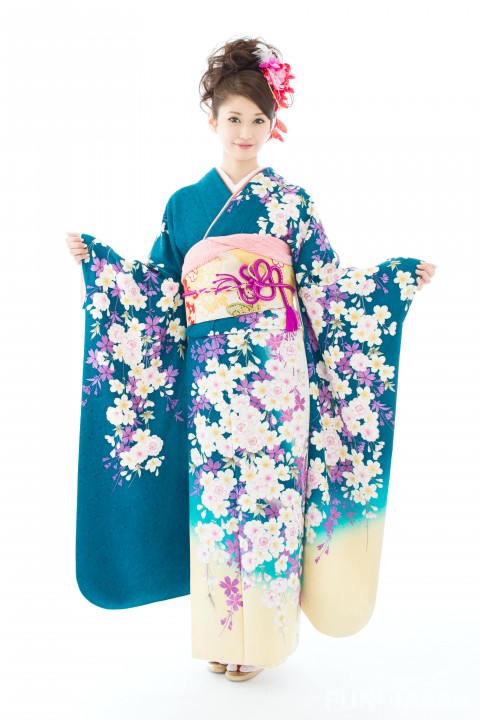
What does the color blue mean in Japanese culture
calmness
It is a lucky color used in Japanese architecture and Shinto shrines. Blue represents calmness, stability, and security and the sea and sky surrounding Japan.
What does the color purple kimono mean
Purple, for example, is a metaphor for undying love, the imagery deriving from the fact that gromwell (murasaki), the plant used to create the dye, has very long roots. Perhaps the most popular colour for kimono is red, derived from safflower (benibana).
What do different kimono patterns mean
PATTERNS: Seigaiha is a pattern of overlapping circles, symbolic of waves and the ebb and flow of life. Shippo is an infinitely repeating circular design representing the seven jewels or treasures from the Buddhist Sutras. Hexagons represent the pattern on a tortoise shell and signify longevity and good fortune.
What does the Indigo kimono mean
It is said that indigo has anti-inflammatory, detoxifying, and hemostasis effects, and that "kachi" is associated with "winning" (勝ち kachi), thus it is said to be good luck. In the Edo period (around the 17th century), indigo colour became popular not only in kimono but also in working clothes and shop-curtain.
キャッシュ
Is blue a lucky colour in Japan
Even today, blue is associated with the sky and the sea in Japan. Japanese also associate blue with purity, serenity, stability, dignity, loyalty as well as coolness and passivity. In addition, blue is one of the lucky colors in Japan.
Can you wear blue in Japan
Other colors are worn but blue and white are considered the most common. Wearing a tie is acceptable but optional on most occasions. Avoid wearing a black tie as it is associated with funerals. It's advisable for men to be clean shaven as stubble is generally frowned upon.
Can a kimono be any color
There are so many colors of kimono that it is almost infinite. In addition to the internationally recognized three primary colors, there are also colors unique to Japan, making it very difficult to express the beauty of kimono in a specific color.
What is the best color for a kimono
If you think about it it's not difficult to keep your kimono in touch with the seasons. For autumn, leaves and colors such as brown, red and dark green are very fitting. For winter darker colors such as red and black, spring brings to mind pink and flowers and summer needs bright colors such as blue and yellow.
What do the different kimono colors mean
– The kimono colors have distinctive meanings in Japan. Blue: the ocean and sky; red: wards off evil spirits; pink: spring and youth; purple: noble; yellow: harvest season. Bright colors used for spring, dark colors used for winter and paster colors are used for summer.
What do black kimonos mean
The black kimono plays an essential role in Japanese society. In modern Japan, people mostly wear them for formal occasions, such as weddings, funerals, and special events. Historically, black dye was difficult to both produce and obtain.
Why do Japanese gardeners wear blue
Inexpensive cotton fabric dyed in Japanese indigo, or ai, produced aesthetically pleasing and remarkably durable garments for daily use. Farmers wore indigo-dyed clothes for field work, believing the natural ammonia in indigo warded off mosquitoes and poisonous snakes.
What is indigo blue in Japanese
Ai
Ai (藍), as it's known in Japanese, is made from the leaves of the Japanese indigo plant and was initially used by aristrocrats and samurai.It can now be found adding color to everything from kimonos to clothing like blue jeans and linens. Sadly, most of the indigo color we see now is made synthetically.
What do the colors of kimonos mean
– The kimono colors have distinctive meanings in Japan. Blue: the ocean and sky; red: wards off evil spirits; pink: spring and youth; purple: noble; yellow: harvest season. Bright colors used for spring, dark colors used for winter and paster colors are used for summer.
Why does Japan wear blue uniforms
One theory goes that the color followed the light blue uniform adopted by Tokyo Imperial University, predecessor of the University of Tokyo, which was churning out players who made the national squad. Another story says Japan settled on blue to represent "waters surrounding the national land."
Do black kimonos exist
The black kimono plays an essential role in Japanese society. In modern Japan, people mostly wear them for formal occasions, such as weddings, funerals, and special events. Historically, black dye was difficult to both produce and obtain.
What is the luckiest colour in Japan
Even today, blue is associated with the sky and the sea in Japan. Japanese also associate blue with purity, serenity, stability, dignity, loyalty as well as coolness and passivity. In addition, blue is one of the lucky colors in Japan.
What is the lucky color in Japan
Blue is also one of Japan's most important lucky colors, with the others in the category being yellow, white, purple, green, and red.
Do kimono colors mean anything
– The kimono colors have distinctive meanings in Japan. Blue: the ocean and sky; red: wards off evil spirits; pink: spring and youth; purple: noble; yellow: harvest season. Bright colors used for spring, dark colors used for winter and paster colors are used for summer.
What does a yellow kimono mean
For the Japanese, yellow is the colour of light, and the warmth of the sun is soothing and the benefit of light is most felt. Therefore, the yellow kimono has the meaning of "warm", "active", and "gorgeous" that the light has. It also means "youth," "hope," and "change."
What colors are taboo in Japan
In Japan, ordinary people were forbidden to wear purple clothes for a long time. The color purple, murasaki (紫) in Japanese, used to be very rarely seen because it was difficult and time-consuming to make.

0 Comments