
What is a mochi made of?
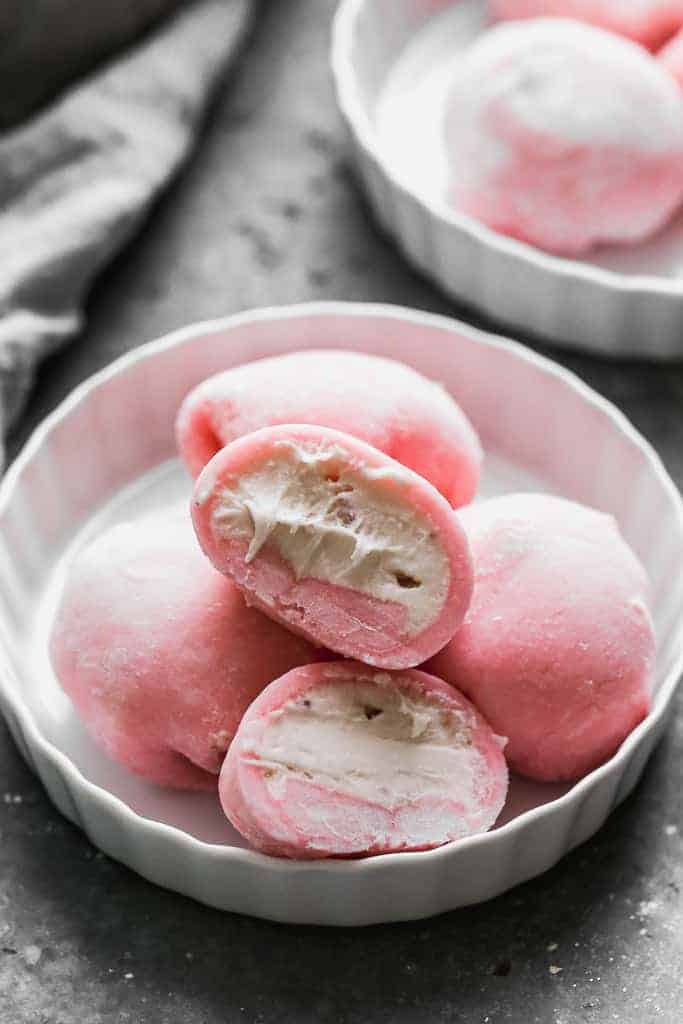
What are mochi made of
Mochi (もち, 餅) is a Japanese rice cake made of mochigome (もち米), a short-grain japonica glutinous rice, and sometimes other ingredients such as water, sugar, and cornstarch. The steamed rice is pounded into paste and molded into the desired shape.
Why do Japanese people eat mochi
Mochi has been a Japanese staple ingredient for a long time, often eaten during celebrations and seasonal festivals. Many people consider it an auspicious food for its color, shape, and seasoning.
Is Mochi ice cream or cake
And in America, we can't talk much about mochi without thinking about mochi ice cream! Mochi is a Japanese cake/sweet made from pounding glutinous rice into a sticky paste and molding it into shape. Mochi can then be prepared in many ways, mochi ice cream being one of the most recently implemented ideas.
Is mochi not ice cream
In Mochi Ice Cream, the word “mochi” mostly refers to the ball of sweet rice dough that encapsulates that delicious ice cream. In Japan, mochi in general is a type of rice cake. A piece of mochi about the size of a small matchbox is about the equivalent of eating an entire bowl of rice.
Are mochi healthy for you
When you combine rice and seaweed, mochi is low in saturated fat and very low in cholesterol. It is also a good source of Vitamins A, C, E (Alpha Tocopherol), and K, Niacin, Pantothenic Acid, and Phosphorus. It's also a very good source of Riboflavin, Folate, Calcium, Iron, Magnesium, Copper, and Manganese.
Is mochi made in Japan
Mochi sweets or mochigashi (餅菓子) are traditional Japanese confectioneries made from glutinous rice, non-glutinous regular white rice, kudzu starch, or bracken starch. Many kinds of mochi sweets are stuffed with red bean paste, but there are some that do not include the red bean filling.
Is Japanese mochi good for you
When you combine rice and seaweed, mochi is low in saturated fat and very low in cholesterol. It is also a good source of Vitamins A, C, E (Alpha Tocopherol), and K, Niacin, Pantothenic Acid, and Phosphorus. It's also a very good source of Riboflavin, Folate, Calcium, Iron, Magnesium, Copper, and Manganese.
Is mochi hard to digest
While mochi is made from starch, which is good for digestion, it can sometimes cause an obstruction, with patients showing severe symptoms that can suggest a strangulated obstruction.
Is mochi a snack or dessert
Mochi (pronounced MOE-chee) is a Japanese dessert made of sweet glutinous rice flour or mochigome. Mochi dough is often tinted with green tea powder (matcha) or other food colorings and wrapped around a sweet center to form a small, bite-sized confection with a chewy, smooth, elastic texture.
Is mochi always filled with ice cream
The difference is all about the filling
There is really just one difference between mochi and ice cream mochi — the filling. By definition, mochi is the rice flour dough and it can be wrapped around a variety of fillings.
How unhealthy is mochi ice cream
Small Serving Sizes of Mochi Ice Cream
The average mochi ball is about 100 calories. Whereas filling up a bowl of ice cream might equate to over 350 calories, a small 100 calorie snack won't throw off your weight loss goals. A small taste of indulgence will keep you motivated and happy throughout the day.
Is mochi hard on stomach
While mochi is made from starch, which is good for digestion, it can sometimes cause an obstruction, with patients showing severe symptoms that can suggest a strangulated obstruction.
Is Japanese mochi high in calories
The average mochi ball is about 100 calories. Whereas filling up a bowl of ice cream might equate to over 350 calories, a small 100 calorie snack won't throw off your weight loss goals. A small taste of indulgence will keep you motivated and happy throughout the day.
Who invented mochi in Japan
The exact origin of mochi is unknown, though it is said to have come from China. The cakes of pounded glutinous rice appear to have become a New Year's treat during Japan's Heian period (794-1185). As early as the tenth century, various kinds of mochi were used as imperial offerings at religious ceremonies.
How should mochi be eaten
One traditional way to prepare mochi is simply to grill or bake it. Typically, grilled or baked mochi is served with soy sauce and wrapped in seaweed (isobe-maki). Some other classic ways to eat it is with anko (sweet red bean paste) or with kinako (soy powder and sugar), but there are many variations.
What does mochi do to your body
The delicious and sweet treat provides your body with a handful of beneficial nutrients including bone-strengthening calcium, blood-pressure-lowering potassium, and energizing B vitamins.
How healthy are mochi
Is Mochi Healthy Mochi is a versatile and healthy snack, and was popular amongst rice farmers and Samurai for increasing stamina and for its convenient format. Mochi is one of the few carbohydrate sources that is packed with protein, and is free from cholesterol.
Are you supposed to eat mochi
Mochi is a traditional Japanese food, with origins in China and Southeast Asia, that can be eaten year-round, but is especially eaten in celebration of the New Year. There are many types of mochi ranging from traditional to more modern and fusion variations.
Can you eat mochi without filling
Daifuku will usually have a sweet filling while mochi can be plain with no filling. However, nowadays both types of glutinous rice cakes can come with some sort of filling.
Are Mochis unhealthy
When you combine rice and seaweed, mochi is low in saturated fat and very low in cholesterol. It is also a good source of Vitamins A, C, E (Alpha Tocopherol), and K, Niacin, Pantothenic Acid, and Phosphorus. It's also a very good source of Riboflavin, Folate, Calcium, Iron, Magnesium, Copper, and Manganese.


0 Comments